
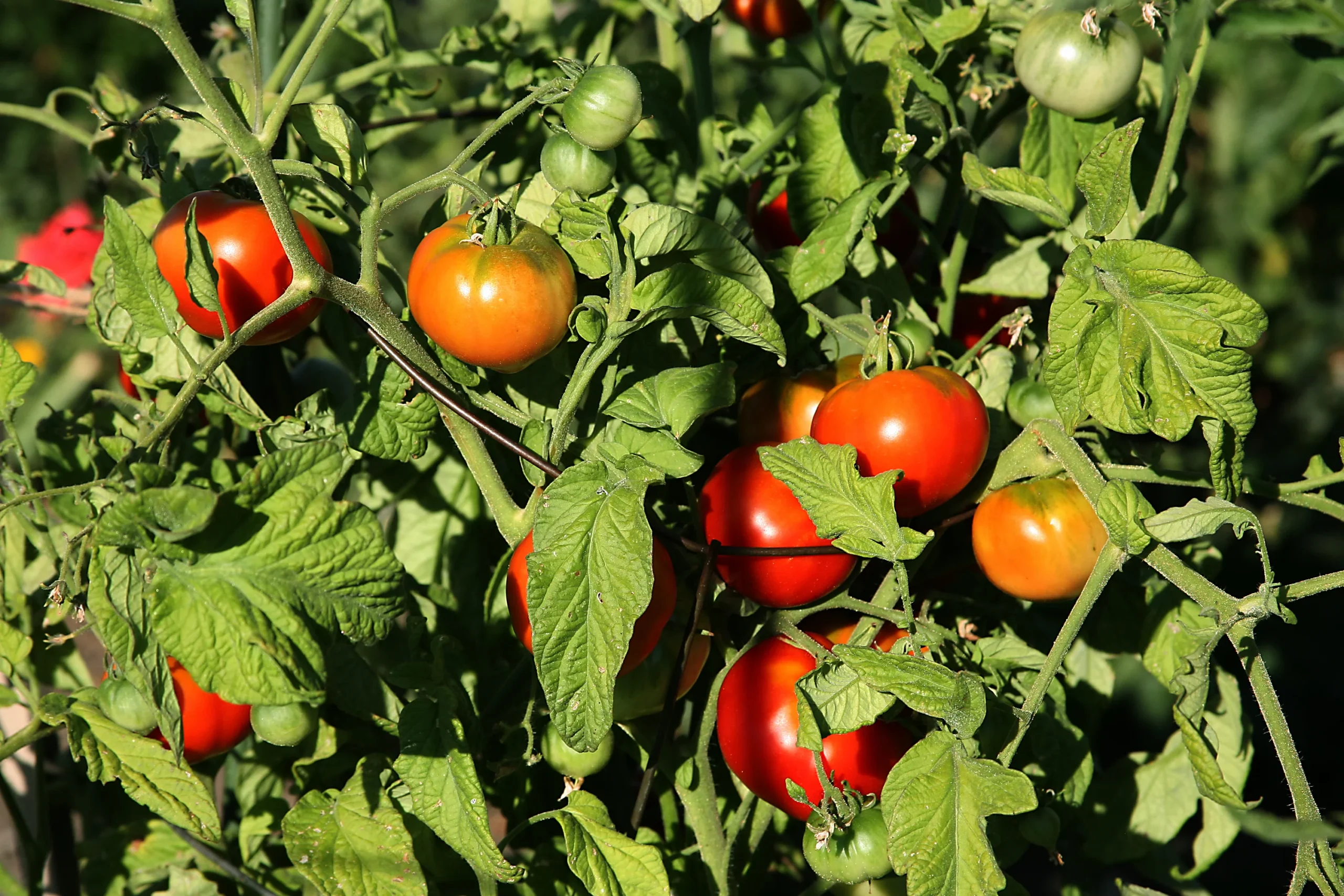
In 1793, the Creole refugees who fled the successful uprising of enslaved people in Haiti brought this tomato with them. Dr. Weaver was able to find this tomato depicted in paintings of that time period made by the Peale family of Philadelphia, well before it became a popular food in North America (see Still Life: Balsam Apples and Vegetables, 1820 by James Peale). The kids at Pentridge Children’s Garden in West Philadelphia explore the history of the Haitian Revolution while growing and eating this tomato. Our packets were illustrated by Jasmine Hamilton, and feature Marie-Jeanne Lamartiniére of of the revolutionary Haitian soldiers.
Solanum lycopersicum Plat de Haiti
Nomenclature
Latin NameSolanum lycopersicum
VarietyPlat de Haiti
Common name in English and GermanTomato
Regional namesHaitian Heirloom Tomato (English), Plat de Haiti (French), Manzana de Hispaniola (Spanish colonial).
Geographic data
Variety’s range of distributionHaiti
Crop's center of diversityMesoamerica, South America (Andes Region)
Provenance and collection data
CollectionKitchen garden
Seed sourceSpore's partner
PartnerSoul Fire Farm (via Jess)
ProgrammeSoul Fire Farm (via Jess)
Cultivation
Life cycleAnnual
Winter hardyNo
Months suitable for planting seedsMarch, April
Seed startingIndoor
Days to harvest90
Growth habitScrambler
Stem orientationAscending
Plant height (cm)100
Sun exposureFull sun
Water RequirementsModerate water demand
Soil preferenceWell drained, Loam
Successional communityWood edge, Patchy shrub-land
Potential use in agro-designA very sturdy variety with sprawling shrubby growth. Indeterminate fruiting pattern. If an adequate trellis support provided this variety can be used in the intercropping systems.
Reproduction
PollinationSelf pollinating
Reproductive biologyBisexual flower
Likelihood of hybridisationLess likely
Use
Consumable partsFruits & berries
Gastronomic usePlat de Haiti can be prepared in a sauce for pasta, soups, or as topping for grilled dishes:
https://www.justmaikacooking.com/recipes/creole-tomato-sauce-recipe-haitian/