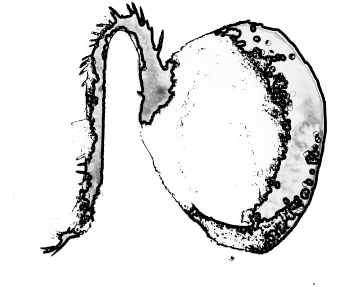
Atriplex hortensis Rubra
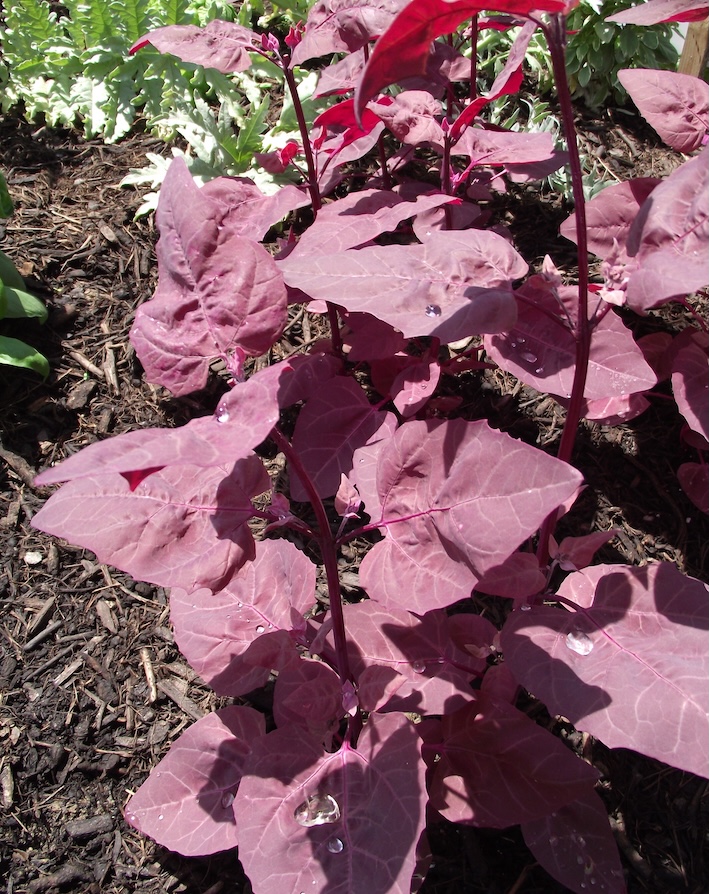
Nomenclature
Latin NameAtriplex hortensis
VarietyRubra
Common name in English and GermanGarden orach, Gartenmelde
Regional namesGarden orache (English), Red orache (English), French spinach (English), Arrach (English), Orach (English), Arroche des jardins (French), Arroche épinard (French), Gartenmelde (German), Atriplice degli orti (Italian), Armuelle de huerta (Spanish), Espinaca de carne (Spanish), Ramos de coral (Spanish), Armolas (Portuguese), Erva-armola (Portuguese), Tuinmelde (Dutch), Łoboda ogrodowa (Polish), Lebeda zahradní (Czech), Loboda záhradná (Slovak), Vrtna loboda (Slovenian), Kerti laboda (Hungarian), Lobodă (Romanian), Havemælde (Danish), Trädgårdsmålla (Swedish), Mållspenat (Swedish), Hagemelde (Norwegian), Fjellspinat (Norwegian), Tarhamaltsa (Finnish), Aedmalts (Estonian), Dārza balodene (Latvian), Harilik malts (Estonian), Λουβουδιά [Louvoudiá] (Greek), Лебеда садовая [Lebeda sadovaya] (Russian), Лутига городня [Lutyha horodnya] (Ukrainian), Лобода садова [Loboda sadova] (Ukrainian), Пахчари мăян [Pakhchari måyan] (Chuvash/Russian), رغل بستاني [Rughl bustani] (Arabic), 榆钱菠菜 [Yúqián bōcài] (Chinese), 바닷가아욱 [Badatga-auk] (Korean), चक्कोत सोप्पु [Chakkōta soppu] (Kannada), பச்சிலை [Pachilai] (Tamil), Pahari-paleng (Assamese), Vasta haak (Kashmiri), Bayam prancis (Indonesian), Rau tân lê (Vietnamese), Kara pazı (Turkish)
Geographic data
Variety’s range of distributionEastern and Western Europe, Eurasia
Crop's center of diversityCentral Asia, Europe, Southwest Asia (Near East)
Provenance and collection data
CollectionKitchen garden
Seed sourceCommercial supplier, Spore garden
Cultivation
Life cycleAnnual
Winter hardyNo
Months suitable for planting seedsMarch, April, May, June
Seed startingOutdoor
Days to harvest40
Growth habitWoody herb
Stem orientationUpright
Plant height (cm)130
Sun exposureFull sun, Partial shade
Water RequirementsRainfed
Soil preferenceHighly adaptable
Potential use in agro-designGarden orach is easy to cultivate plant although seedlings are somewhat tender. Once established it will reseed in the garden bed, making it a nice and no maintenance auxiliary crop to cultivate on the side of the main cultures.
Reproduction
PollinationCross pollinating
Reproductive biologyMonoecious
Likelihood of hybridisationVery likely
Use
Consumable partsSeeds, Leaves
Gastronomic useLeaves can be consumed in the same way like spinach, raw and cooked. Seed, when collected in quantities can be added to flour for the bread baking – practice documented in Eastern Europe and Russia in the 19th century.