Related to goddess Bastet in Ancient Egypt, symbolizing protection, fertility and motherhood
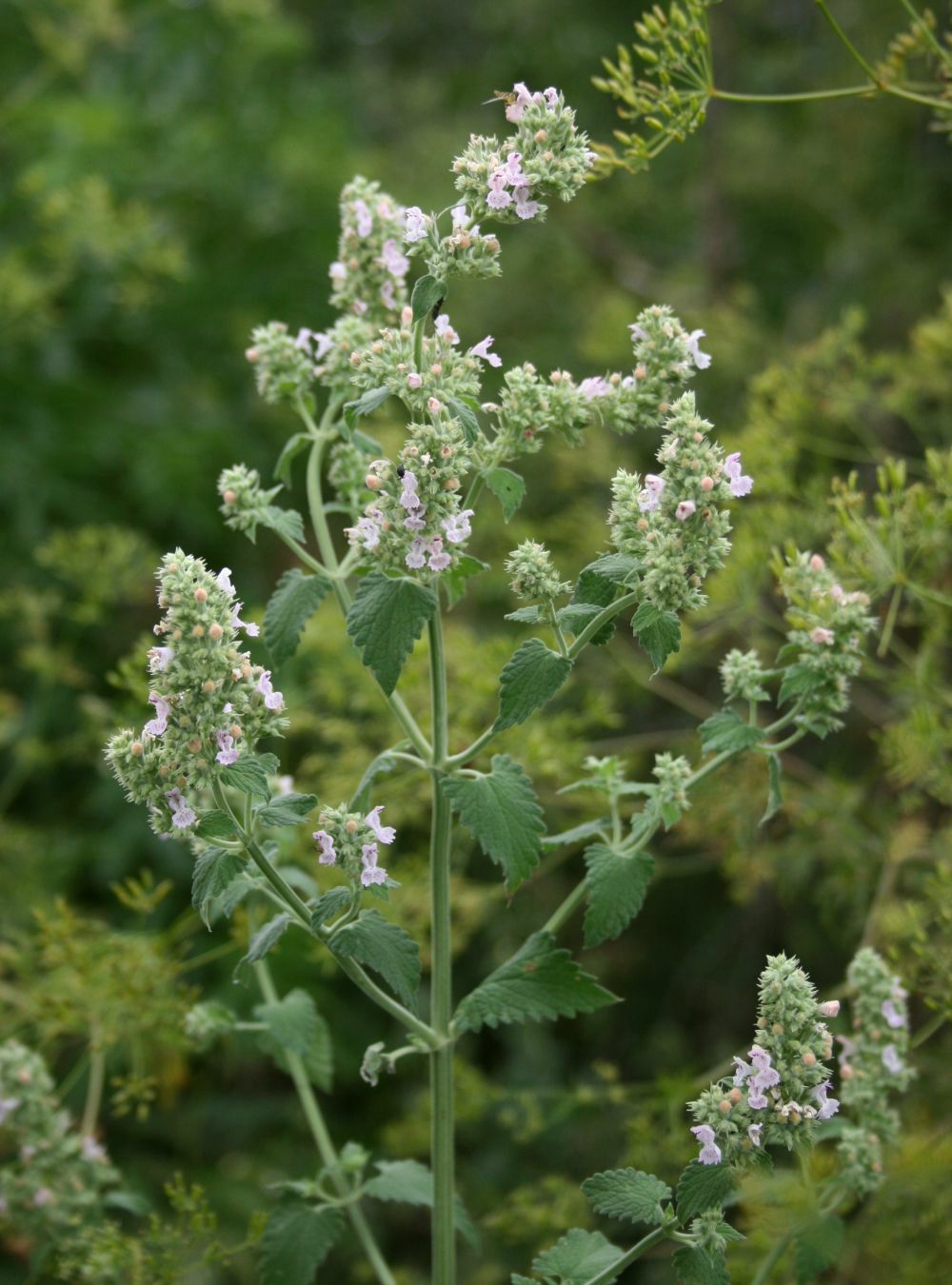
Nepeta cataria
Nomenclature
Latin NameNepeta cataria
Common name in English and GermanCatnip, Katzenminze
Regional namesCatnip (English), Catmint (English), Catwort (English), Cataire (French), Herbe aux chats (French), Echte Katzenminze (German), Katzenmelisse (German), Erba gattaia (Italian), Hierba gatera (Spanish), Menta de gato (Spanish), Erva-gateira (Portuguese), Kattekruid (Dutch), Kocimiętka właściwa (Polish), Šanta kočičí (Czech), Kocúrnik obyčajný (Slovak), Illatos macskamenta (Hungarian), Katteurt (Danish), Kattemynte (Norwegian), Kattmynta (Swedish), Aitokissanminttu (Finnish), Harilik naistenõges (Estonian), Котовник кошачий [Kotovnik koshachiy] (Russian), Котяча м'ята [Kotyacha m'yata] (Ukrainian), Коча билка [Kocha bilka] (Bulgarian), Μαγιοβότανο [Magiovótano] (Greek), נענע החתולים [Na'na hachatulim] (Hebrew), پونهسای گربهای [Pūneh-sāy-e gorbeh-ī] (Persian), イヌハッカ [Inuhakka] (Japanese), 개박하 [Gaebakha] (Korean), 荆芥 [Jīngjiè] (Chinese)
Geographic data
Variety’s range of distributionEurasia, naturalized in Northern Europe, North America, New Zealand, and other temperate regions
Crop's center of diversityCentral Asia, Europe, Southwest Asia (Near East)
Provenance and collection data
CollectionMedicinal
Seed sourceCommercial supplier, Spore garden
Cultivation
Life cycleShort-Lived Perennial
Winter hardyYes
Cold stratificationyes
Months suitable for planting seedsApril, May
Seed startingOutdoor
Days to harvest80
Growth habitHerb
Stem orientationUpright
Plant height (cm)50-100
Sun exposureFull sun, Partial shade
Water RequirementsDrought resistant
Soil preferenceWell drained, Neutral to higher pH
Successional communityPioneering, Patchy shrub-land
Potential use in agro-designLow maintenance and drought resistant, deer and rabbit resistant, attracts pollinators
Reproduction
PollinationSelf pollinating
Reproductive biologyMonoecious
Likelihood of hybridisationLess likely
Use
Consumable partsBuds, Flowers, Leaves
Medicinal actionAnti-spasmodic, Sedative, Nervine relaxant, Carminative
Parts used medicinally and their effectAerial parts used in teas for gas, coughs, colds, fever. Can also be used as a poultice.
Gastronomic useUsed as a mild mint in stews or sauces