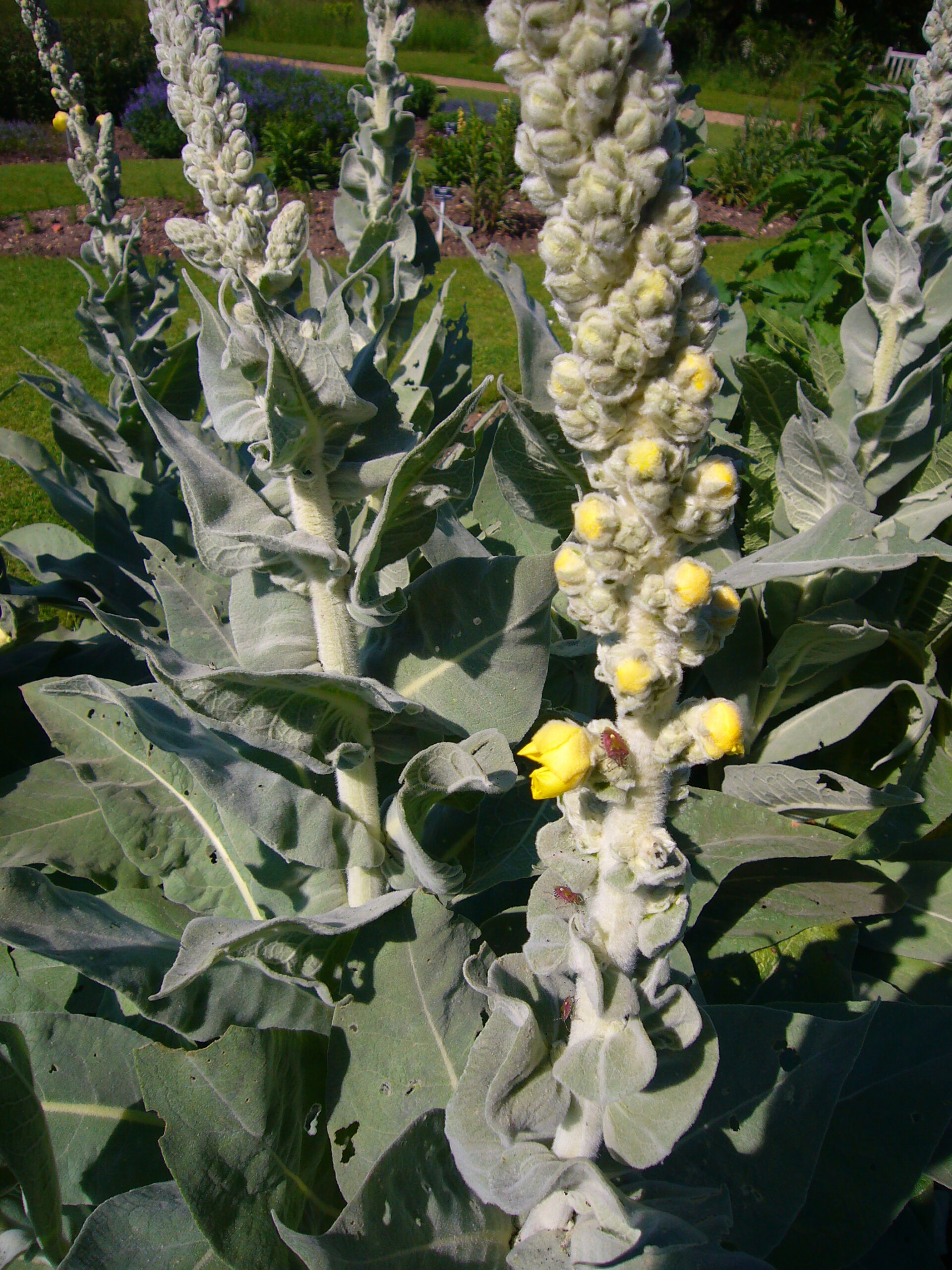
Verbascum densiflorum
Nomenclature
Latin NameVerbascum densiflorum
Common name in English and GermanDense-flowered Mullein
Regional namesDense-flowered mullein (English), Great mullein (English), Orange mullein (English), Adam's flannel (English), Beggar's blanket (English), Molène à fleurs denses (French), Bouillon-blanc (French), Molène faux bouillon-blanc (French), Großblumige Königskerze (German), Windblumen-Königskerze (German), Gordolobo (Spanish), Hierba del paño (Spanish), Verbasco falso (Italian), Stalkaars (Dutch), Toortssoort (Dutch), Storblomstret kongelys (Danish), Filtbladet kongelys (Danish), Ölandskungsljus (Swedish), Prydkongslys (Norwegian), Akantulikukka (Finnish), Dziraudzene (Latvian), Tūba (Lithuanian), Dziewanna wielkokwiatowa (Polish), Divizna velkokvětá (Czech), Dúbička veľkokvetá (Slovak), Szöszös ökörfarkkóró (Hungarian), Дребничка динка [Drebna dinka] (Bulgarian), Дивїзна густоквіткова [Dyvizna hustokvitkova] (Ukrainian), Коровяк скипетровидный [Korovyak skipetrovidnyy] (Russian), φλόμος [flómos] (Greek), בוצין נאה [Butsin na'eh] (Hebrew), البوصير كثيف الأزهار (Arabic), خرغوګ [Kharghwag] (Pashto), 密花毛蕊花 [Mìhuā máoruǐhuā] (Chinese), ビロードモウズイカ [Birōdomōzuika] (Japanese), 밀화모예화 [Milhwamoyehwa] (Korean)
Geographic data
Variety’s range of distributionParts of Europe and temperate Eurasian zones
Crop's center of diversityEurope
Provenance and collection data
CollectionMedicinal
Seed sourceCommercial supplier, Spore garden
Cultivation
Life cycleBiannual
Winter hardyYes
Cold stratificationyes
Months suitable for planting seedsApril, May, June
Seed startingOutdoor
Growth habitHerb
Stem orientationUpright
Use as ground coverRosette
Plant height (cm)30-200
Sun exposureFull sun
Water RequirementsDrought resistant
Soil preferenceWell drained, Loam, Sandy, Rocky, Neutral to higher pH
Successional communityPioneering, Grassland, Patchy shrub-land
Potential use in agro-designCan be incorporated into soil rehabilitation projects in dry areas thanks to the deep taproot of the plant.
Reproduction
PollinationSelf pollinating
Reproductive biologyBisexual flower
Likelihood of hybridisationLess likely
Use
Consumable partsFlowers, Leaves
Medicinal actionExpectorant, Anti-inflamatory
Parts used medicinally and their effectLeaves, flowers and roots used for soothing coughs, reducing inflammation, minor skin irritations, earaches and urinary issues.
Gastronomic useLeaves are fuzzy, better eaten in stews