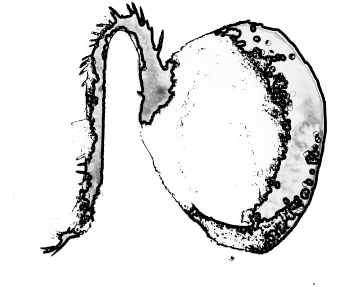
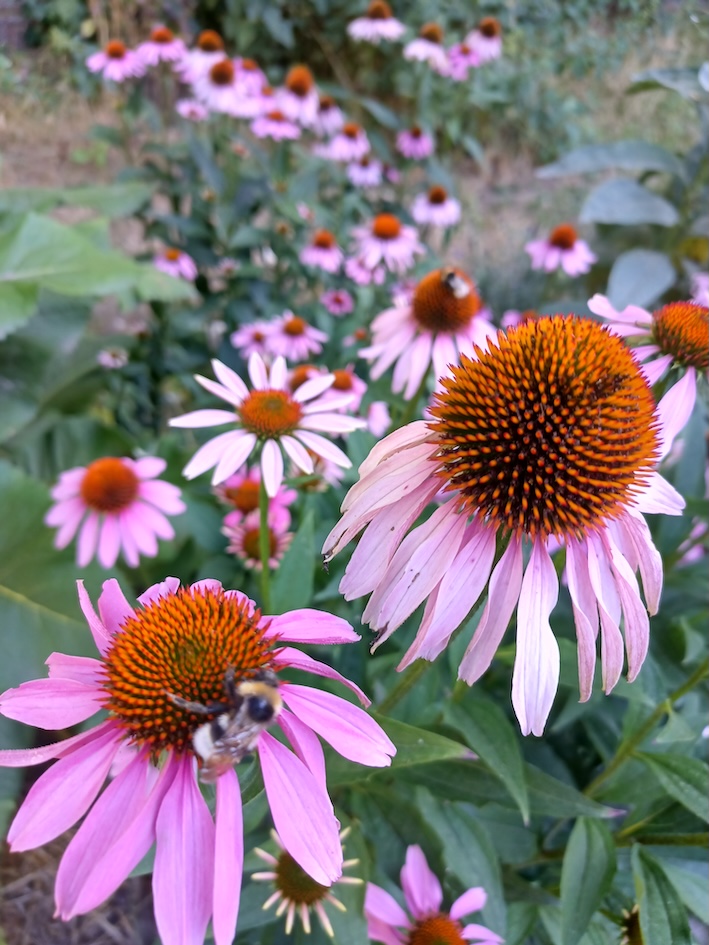
For uniform germination seeds need to be exposed to chilling weather for a few weeks. Vegetative propagation from the adventitious roots if possible and unproblematic.
Echinacea purpurea Medicinal
Nomenclature
Latin NameEchinacea purpurea
VarietyMedicinal
Common name in English and GermanConeflower, Sonnenhüte
Regional namesIchahpe hu (Lakota), Purple coneflower (English), Eastern purple coneflower (English), Echinacée pourpre (French), Purpurroter Sonnenhut (German), Purpur-Igelkopf (German), Echinacea (Italian), Equinácea purpúrea (Spanish), Equinácea (Portuguese), Rode zonnehoed (Dutch), Purpursolhat (Danish), Kaunopunahattu (Finnish), Purpur-siilkübar (Estonian), Jeżówka purpurowa (Polish), Třapatka nachová (Czech), Ameriški slamnik (Slovenian), Bíbor kasvirág (Hungarian), Эхинацея пурпурная [Ekhinatseya purpurnaya] (Russian), Ехінацея пурпурова [Ekhinatseya purpurova] (Ukrainian), 紫花松果菊 [Zǐ huā sōng guǒ jú] (Chinese), Ekinazya (Turkish)
Geographic data
Variety’s range of distributionNorth America, cultivated in temperate climates as ornamental and medicinal plant
Crop's center of diversityNorth America
Provenance and collection data
CollectionMedicinal
Seed sourceCommercial supplier, Spore garden
Cultivation
Life cycleShort-Lived Perennial
Winter hardyYes
Cold stratificationyes
Months suitable for planting seedsMarch, April
Seed startingOutdoor
Days to harvest380
Growth habitHerb, Woody herb
Stem orientationUpright
Plant height (cm)70
Sun exposureFull sun, Partial shade
Water RequirementsRainfed
Soil preferenceWell drained, Loam, Lower to neutral pH
Successional communityPioneering, Grassland, Wood edge, Patchy shrub-land
Potential use in agro-designCan be planted as a companion plant in syntropic designs or cultivated in flower beds. Loved by the bees.
Reproduction
PollinationCross pollinating
Reproductive biologyBisexual flower
Likelihood of hybridisationVery likely
Use
Consumable partsFlowers, Leaves, Roots
Medicinal actionAnti-microbial, Tonic, Anti-inflamatory, Vulnerary
Parts used medicinally and their effectBoth aerial parts and roots are used for anti-inflammatory action and immunomodulation.
Extracts can also be applied externally for the their antibacterial effect.
Gastronomic useMedicinal teas can be brewed from the dried parts of the plants.