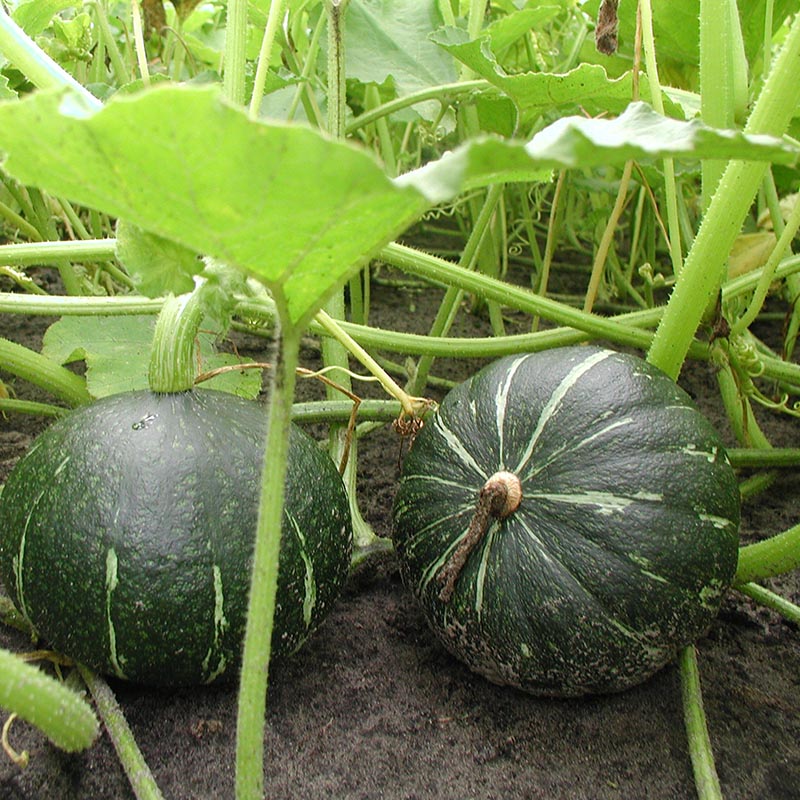
In the modern era, a Western-type squash (species Cucurbita maxima) was introduced to Japan in 1863, finding ideal growing conditions in Hokkaido’s cool climate. Local farmers selectively bred these into compact, sweet varieties known in Japan as Uchiki Kuri (“浮木クリ”, meaning “chestnut [flavored] of Uchiki”), which became the familiar “Hokkaido pumpkin.” The name “Hokkaido” in Europe simply refers to this Japanese origin. Green-skinned selections (often marketed as “Green Hokkaido”) share this origin: they were developed on Hokkaido from local stock and later introduced abroad in the 20th century.
ja.wikipedia.org
Cucurbita maxima Green hokkaido
Nomenclature
Latin NameCucurbita maxima
VarietyGreen hokkaido
Common name in English and GermanGreen Hokkaido Pumpkin
Regional namesKabocha (Japanese), danhobag (korean)
Geographic data
Variety’s range of distributionJapan, California, Florida, Southwestern Colorado, Mexico, Tasmania, Tonga, New Zealand, Chile, Provence, South Africa
Crop's center of diversityMesoamerica, South Asia (India+)
Provenance and collection data
CollectionKitchen garden
Seed sourceCommercial supplier, Spore garden
Cultivation
Life cycleAnnual
Winter hardyNo
Months suitable for planting seedsMarch, April
Seed startingIndoor
Days to harvest120
Growth habitVine
Stem orientationProstrate, Creeping
Use as ground coverDensely covers soil
Plant height (cm)200
Sun exposureFull sun
Water RequirementsModerate water demand
Soil preferenceWell drained, Loam, Lower to neutral pH
Successional communityPioneering, Grassland
Potential use in agro-designFamously, pumpkins are a member of the three-sisters planting system. Comparing to other pumpkins this one is relatively compact.
Reproduction
PollinationCross pollinating
Reproductive biologyMonoecious
Likelihood of hybridisationPossible
Use
Consumable partsBuds, Flowers, Fruits & berries
Gastronomic useThe taste is sweet and nutty (often compared to chestnuts), and unlike many squash the skin is thin and edible when cooked.
Green Hokkaido (kabocha) is prized in Japanese cuisine and beyond for its sweet, rich flavor and creamy texture. In Japan it is commonly used in nimono (simmered dishes) and tempura, as well as in kabocha croquettes and soups. Its flesh also appears in modern desserts and sweets – for example, pumpkin pie, custards, puddings and ice cream – taking advantage of its natural sweetness. Because the skin is edible, it is especially convenient for roasting or stewing. In Western and global cuisines, Green Hokkaido is roasted whole or in chunks (often with seasonings), pureed into soups or sauces, and used in casseroles, risottos or gnocchi fillings. It can be baked or fried, and its buttery, nutty flesh pairs well with herbs, spices and grains. Even the seeds can be toasted and salted as a nutritious snack or garnish. Overall, the “Green Hokkaido” squash is versatile: its delicate, chestnut-like flavor and edible rind make it a favorite for both savory stews (e.g. kabocha soup, curries) and sweet preparations.