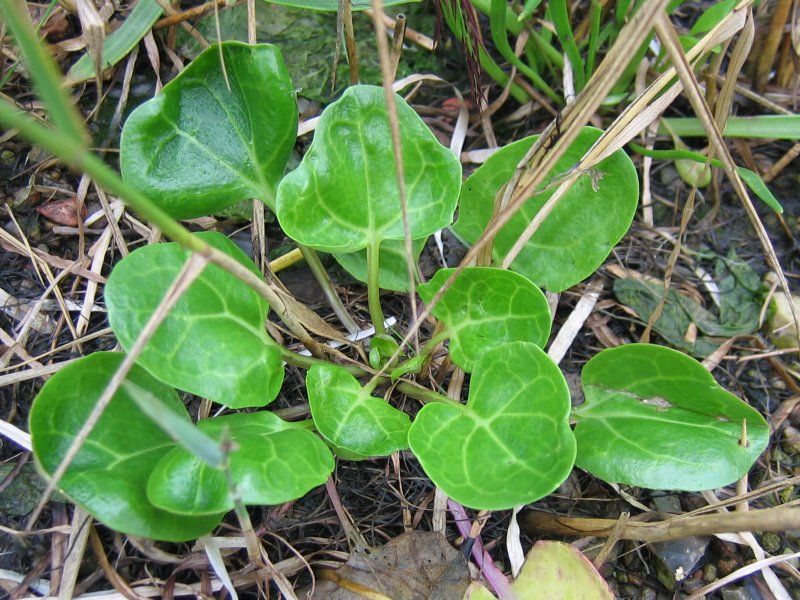
It is intolerant of drought and requires consistent moisture mimicking its native northern coastal habitats. It is a halophyte, capable of thriving in highly saline soils.
Cochlearia officinalis
Nomenclature
Latin NameCochlearia officinalis
Common name in English and GermanSpoonwort, Löffelkraut
Regional namesCommon scurvygrass (English), Scurvy-grass (English), Spoonwort (English), Scorbute-grass (English), Cochléaire officinale (French), Cranson officinal (French), Herbe aux cuillères (French), Herbe au scorbut (French), Echtes Löffelkraut (German), Löffelkräuter (German), Löffelkresse (German), Scharbockskraut (German), Coclearia (Spanish/Italian), Hierba de las cucharas (Spanish), Hierba del escorbuto (Spanish), Coclearia medicinale (Italian), Erba cocchiara (Italian), Cocleária (Portuguese), Erva-das-colheres (Portuguese), Echt lepelblad (Dutch), Lepelblad (Dutch), Warzucha lekarska (Polish), Skörbjuggsört (Swedish), Læge-kokleare (Danish), Skarfakál (Icelandic), Ürt-merisalat (Estonian), Ruijankuirimo (Finnish), Rohtokuirimo (Finnish), Lžičník lékařský (Czech/Slovak), Orvosi kanáltorma (Hungarian), Biolar trá (Irish), Tráighbhiolar (Irish), Llwylys cyffredin (Welsh), Kaşikaotu (Turkish), Kašikara (Serbian/Croatian), Ложечница лекарственная [Lozhechnitsa lekarstvennaya] (Russian), Цинготная трава [Tsingotnaya trava] (Russian), Ложечниця лікарська [Lozhechnitsya likars’ka] (Ukrainian), Голям живовлек [Golyam zhivovlek] (Bulgarian), حشيشة الملاعق [Hashishat al-mala'iq] (Arabic), تودرى [Tawdari] (Egyptian Arabic), 岩荠 [Yánqì] (Chinese), トモシリソウ [Tomoshirisou] (Japanese)
Geographic data
Variety’s range of distributionNorthern and Western Europe, North Africa, Central Asia
Crop's center of diversityEurope
Provenance and collection data
CollectionKitchen aromatics
Seed sourceCommercial supplier, Spore garden
Cultivation
Life cycleBiannual
Winter hardyYes
Cold stratificationyes
Months suitable for planting seedsMarch, June, August, September
Seed startingOutdoor
Days to harvest100
Growth habitHerb
Stem orientationUpright
Use as ground coverRosette
Plant height (cm)10 – 25
Sun exposurePartial shade
Water RequirementsRegular irrigation
Soil preferenceHighly adaptable, Sandy, Rocky
Successional communityPioneering
Potential use in agro-designPotentially can be used as a ground cover in intercropping for humid areas due to its low growing height.
Reproduction
PollinationCross pollinating
Reproductive biologyBisexual flower
Likelihood of hybridisationVery likely
Use
Consumable partsFlowers, Seeds, Leaves
Medicinal actionAnti-microbial, Tonic, Bitter
Parts used medicinally and their effectThe leaves are rich in ascorbic acid (vitamin C), which supports collagen synthesis, immune function, and iron absorption. This plant was historically essential for sailors on long voyages to prevent and treat scurvy.
The plant's essential oil, particularly concentrated in the roots, contains sulfur-based compounds that exhibit inhibitory effects on bacteria such as E. coli and Bacillus subtilis. Crushed fresh leaves are used as a poultice to heal ulcers, pimples, and skin spots. Plant's juice serves as an antiseptic mouthwash for gum disease and canker sores.
Medicinal potency is highest when used fresh, as heating destroys its thermolabile vitamin C content.
Gastronomic useCooking for its peppery, horseradish-like flavor, similar to watercress, raw to salads or cooked in sauces, incorporated into soups, or used to make preserves.
Some people find fresh taste of this plant disagreeable due to the intense horseradish flavor with sulphuric notes. Small quantities can be used to "spice up" heavy fatty dishes and improve their digestibility.