
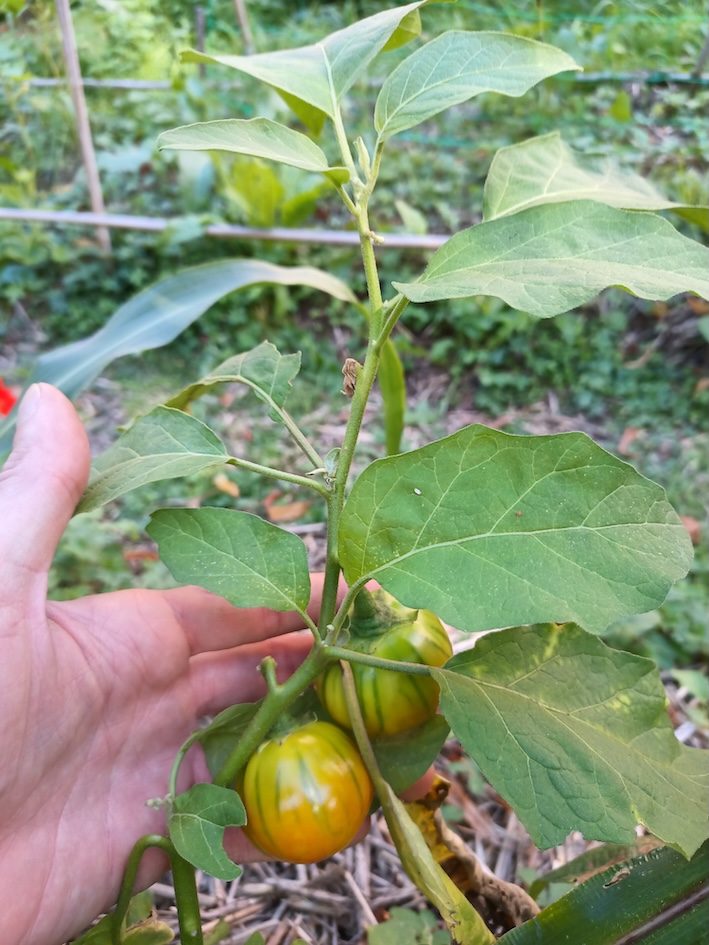
At the Spore’s garden we currently investigate if the plant can overwinter in the field after being pruned down and protected with straw.
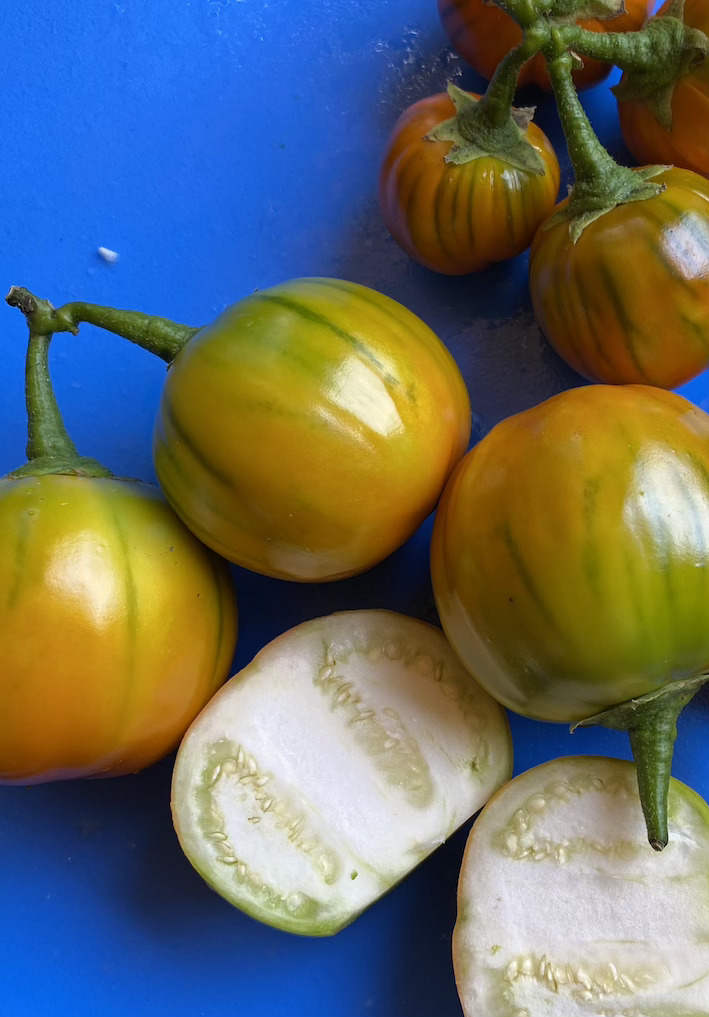
Solanum aethiopicum Melanzana rossa di Rotonda Basilicata
Nomenclature
Latin NameSolanum aethiopicum
VarietyMelanzana rossa di Rotonda Basilicata
Common name in English and GermanEthiopian eggplant, Äthiopische Eierfrucht
Regional namesNakati (Ugabda), dajakattou (West Africa), Jiló (Brasil), Nyanya chungu (Ethiopia), ngogwe (Ethiopian), samṭawk (Mizo, India), khamen akhaba (NW India), titay bii (Darjeeling), sikkim (Nepal), yaaloor (Senegambia)
Geographic data
Variety’s range of distributionTropical Africa, Brazil, Southeast Asia, Northeast India, Northern Mediterranean
Crop's center of diversitySubsaharan East Africa, Subsaharan West Africa, Subsaharan South Africa, Ethiopia, South Asia (India+)
Provenance and collection data
CollectionKitchen garden
Seed sourceSpore's partner, Spore garden
PartnerAterraterra
ProgrammeAterraterra
Cultivation
Life cycleShort-Lived Perennial
Winter hardyNo
Months suitable for planting seedsFebruary, March
Seed startingIndoor
Days to harvest90
Growth habitSub shrub
Stem orientationUpright
Plant height (cm)100
Sun exposureFull sun
Water RequirementsRegular irrigation
Soil preferenceWell drained, Loam, Sandy, Lower to neutral pH
Successional communityPioneering, Patchy shrub-land
Potential use in agro-designCompanion planting with short-cycle crops like amaranth.
Intercropping in a milpa-style system.
Reproduction
PollinationSelf pollinating
Reproductive biologyBisexual flower
Likelihood of hybridisationLess likely
Use
Consumable partsFruits & berries, Leaves
Medicinal actionAnti-microbial, Anti-inflamatory, Cardiac tonic
Parts used medicinally and their effectLeaves for external application for anti-inflammatory and antiseptic use. Leaves and fruits are rich in potassium promote cardiovascular health.
Gastronomic useIn East African region leaves and young shoots are always cooked (to reduce the concentration of bitter alkaloids), typically in soups and stews, similar to spinach.
Solanum aethiopicum is a staple of Indian Manipuri cuisine. it is often sautéed well with oil and spices or cooked dry with potatoes (subzi). It is frequently fried in a tempering (tadka) prepared with ngari (fermented fish). It can also be simply boiled and served with vegetable stew or lentils.