
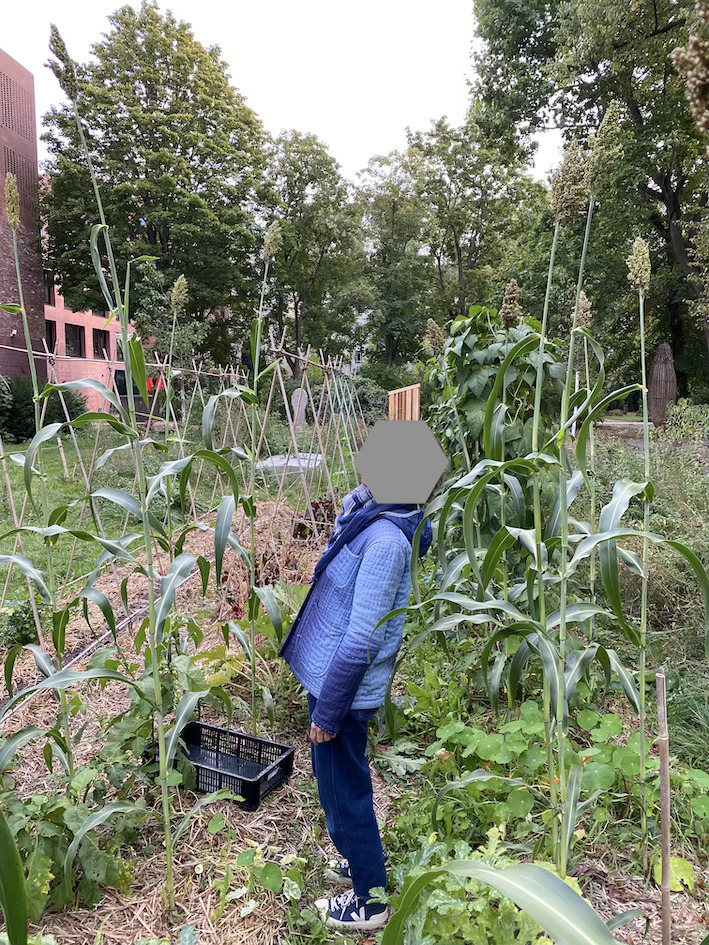
The stalks are too fragile for allowing beans to climb on them.
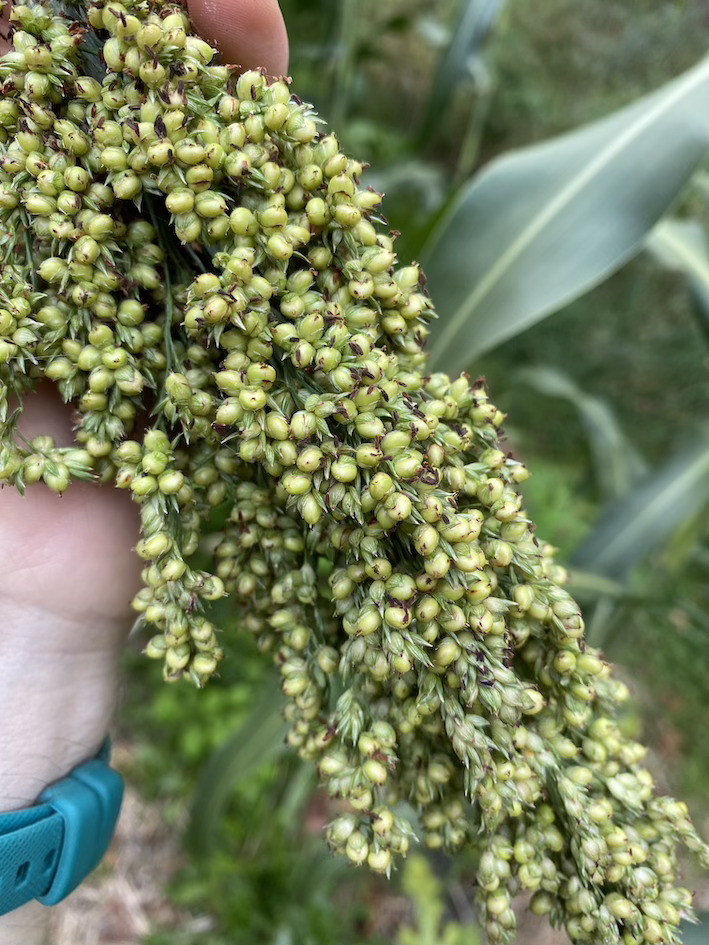
Sorghum bicolor Sugar drip
Nomenclature
Latin NameSorghum bicolor
VarietySugar drip
Common name in English and GermanSorghum, Sorghumhirse
Regional namesDawa (Hausa, West Africa), baba (Yoruba, Nigeria), mtama (Swahili, East Africa), durra (Middle East), amabele (Zulu, South Africa), jowar (Hindi, India), jonna (Telugu, India), gaoliang (China), guinea corn (North America)
Geographic data
Variety’s range of distributionNorth America
Crop's center of diversitySubsaharan East Africa, Subsaharan West Africa
Provenance and collection data
CollectionGrains and pulses
Seed sourceSpore's partner
PartnerWolfslane, Randa Toko
ProgrammeWolfslane, Randa Toko
Cultivation
Life cycleAnnual
Winter hardyNo
Months suitable for planting seedsApril, May
Seed startingIndoor, Outdoor
Days to harvest100
Growth habitGrass
Stem orientationUpright
Plant height (cm)220
Sun exposureFull sun
Water RequirementsDrought resistant
Soil preferenceHighly adaptable, Neutral to higher pH
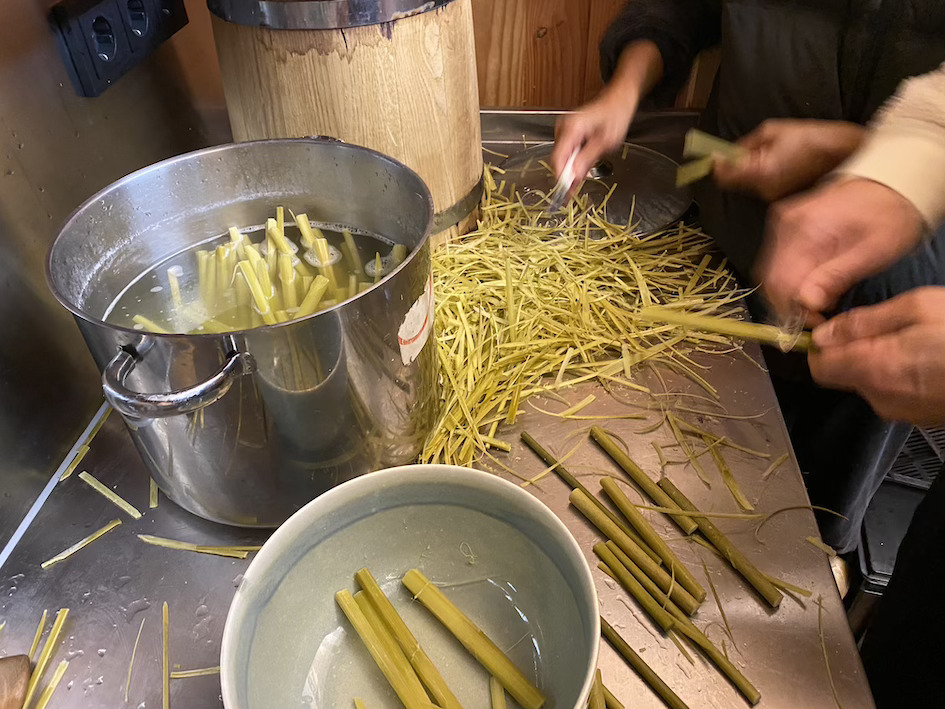
Potential use in agro-designThis variety is a double use: stalks can be processed into molasses and the gluten free grain can be harvested and processed in the number of dishes.
It integrates itself into milpa-style intercropping fields.
The plant is drought resistant but the yield is proportional to the available moisture.
Reproduction
PollinationCross pollinating
Reproductive biologyBisexual flower
Likelihood of hybridisationPossible
Use
Consumable partsSeeds, Stalks
Gastronomic useSorghum has many utilities as a plant and ingredient in dishes. An open source book published by the Directorate of Sorghum Research in Rajendranagar, Hyderabad, India compiles several recipes which utilize sorghum or sorghum based ingredients for a number of dishes:
https://www.researchgate.net/profile/Benhur_Rao/publication/275349079_Sorghum_Recipes_-_A_Healthy_Choice/links/553e314f0cf294deef6fc873.pdf