Symbolism: Represents joy and well-being, associated with Aphrodite and ancient Greek weddings and funerals.
Etymology: From Greek ‘oros’ (mountain) + ‘ganos’ (brightness, joy); “joy of the mountain”.
Traditional ecological knowledge: Used since ancient Greece as symbol of vitality and propagation; crowns for newlyweds, placed on graves for life-after-death beliefs, grows naturally on rocky hills
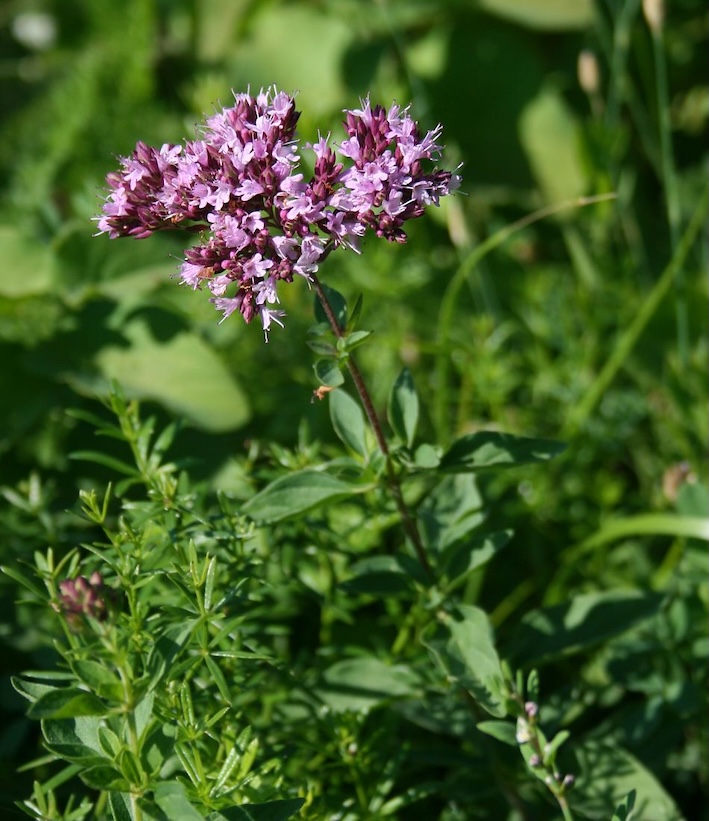
Origanum vulgare Wild oregano, Dost
Nomenclature
Latin NameOriganum vulgare
VarietyWild oregano, Dost
Common name in English and GermanOregano, wilder Majoran
Regional namesOregano (English), Wild marjoram (English), Origan (French), Marjolaine sauvage (French), Oregano (German), Wilder Majoran (German), Dost (German), Origano (Italian), Orégano (Spanish), Orégão (Portuguese), Ourego (Galician), Mäkimeirami [Hill marjoram] (Finnish), Harilik pune (Estonian), Raudene (Latvian), Paprastasis raudonėlis (Lithuanian), Ρίγανη [Rígani] (Greek), Душица [Dushitsa] (Russian), Материнка [Materynka] (Ukrainian), Риган [Rigan] (Bulgarian), Оригано [Origano] (Macedonian/Serbian), Vranilovka (Serbian), Mravinac (Croatian), Dobromysl (Czech), Pamajorán obyčajný (Slovak), Rigoni (Albanian), زعتر [Za'atar] (Arabic/Persian), אורגנו [Oregano] (Hebrew), 牛至 [Niú zhì] (Chinese), बनतुलसी [Ban tulsi] (Hindi)
Geographic data
Variety’s range of distributionEurope, Western Asia, Mediterranean
Crop's center of diversityMediterranean, Europe
Provenance and collection data
CollectionKitchen aromatics
Seed sourceCommercial supplier, Spore garden
Cultivation
Life cycleShort-Lived Perennial
Winter hardyYes
Months suitable for planting seedsMarch, April, May
Seed startingOutdoor
Days to harvest70
Growth habitHerb
Stem orientationUpright
Plant height (cm)40-90
Sun exposureFull sun
Water RequirementsDrought resistant
Soil preferenceHighly adaptable, Well drained, Sandy, Rocky
Successional communityPioneering, Grassland, Patchy shrub-land
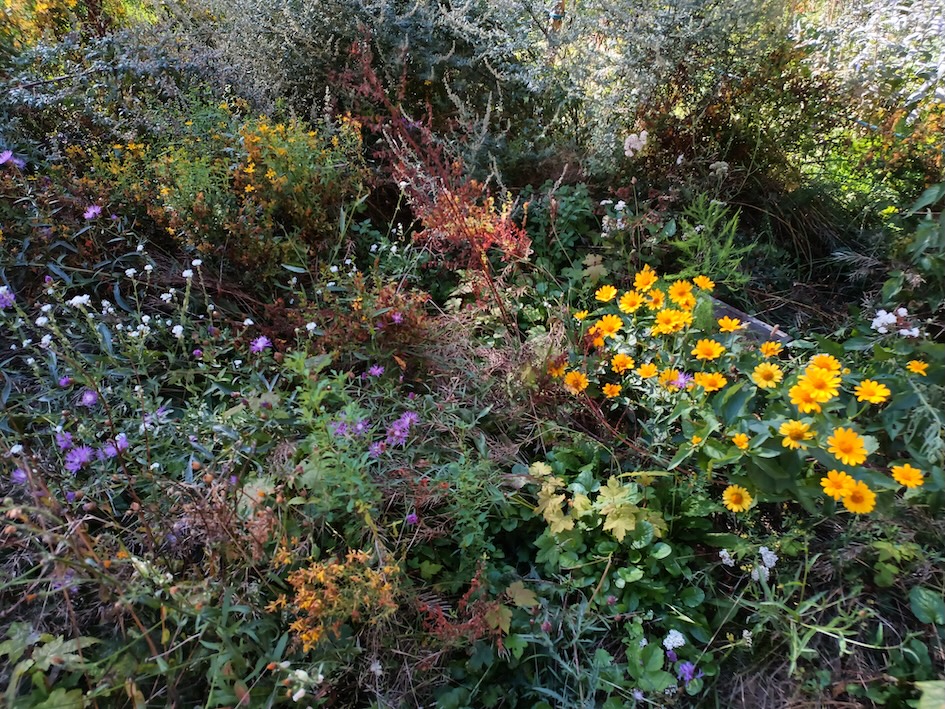
Potential use in agro-designA great plant for mixed meadow designs with good sun exposure. Once establish the plant will proliferate without any need for management. Can be harvested several times in a season.
Reproduction
PollinationCross pollinating
Reproductive biologyBisexual flower
Likelihood of hybridisationPossible
Use
Consumable partsFlowers, Leaves
Medicinal actionExpectorant, Anti-microbial, Tonic, Anti-inflamatory, Carminative, Aromatic, Febrifuge
Parts used medicinally and their effectLeaves, flowers, and young shoots are used medicinally with antimicrobial, expectorant, uplifting effects.
Gastronomic useCulinary, aromatic spice and tea.