
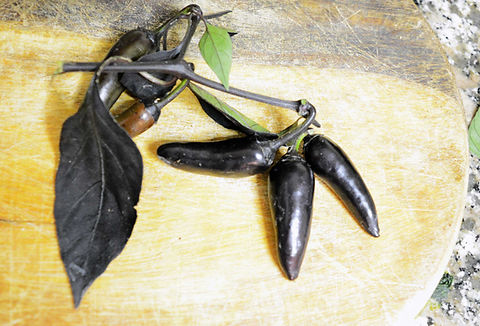
Capsicum baccatum Azteco Nero
Nomenclature
Latin NameCapsicum baccatum
VarietyAzteco Nero
Common name in English and GermanAztec Black Chilli
Regional namesAjí (Spanish), Kellu uchu (Quechua), Huayca (Aymara)
Geographic data
Variety’s range of distributionMexico
Crop's center of diversitySouth America (Andes Region)
Provenance and collection data
CollectionKitchen garden
Seed sourceSpore's partner
PartnerAterraterra
ProgrammeAterraterra
Cultivation
Life cyclePerennial
Winter hardyNo
Months suitable for planting seedsFebruary, March
Seed startingIndoor
Days to harvest80
Growth habitSub shrub
Stem orientationUpright
Plant height (cm)100
Sun exposureFull sun
Water RequirementsRegular irrigation
Soil preferenceWell drained, Deep, Loam, Lower to neutral pH
Successional communityWood edge, Patchy shrub-land
Potential use in agro-designPotential to integrate into food landscapes in the areas where winter temperatures do not go lower than 12 °C. Chili powder has been used as a component of natural insecticides.
Reproduction
PollinationSelf pollinating
Reproductive biologyMonoecious
Likelihood of hybridisationLess likely
Use
Consumable partsFruits & berries, Seeds
Medicinal actionTonic, Anti-inflamatory, Rubefacient
Parts used medicinally and their effectChili peppers contain capsaicin, which provides analgesic effects for arthritis and nerve pain by desensitizing receptors. They increase metabolism and fat oxidation, aiding weight management. High in Vitamin C and antioxidants, peppers support immune function and reduce inflammation. Consumption is linked to improved cardiovascular health and lower mortality rates. Research in 2025 also highlights their neuroprotective potential against Alzheimer’s.
Gastronomic useAzteco Nero is both ornamental and edible. Its flavor profile is like a juicy jalapeño – sweet and slightly fruity under the heat. Good for cooked sauces, stews, and marinades. The thick walls hold up to cooking, and the fruit’s unique color can darken sauces slightly.
Traditional uses align with other C. baccatum: bright ají-style hot sauces or pastes (like Peruvian ají amarillo), as well as pickling. Indeed, baccatum peppers are often quick-pickled or fermented, so Azteco could be used in salsas (e.g. chimichurri, mojo, chili oil) or in spicy marinades.
The subtle fruity notes make a flavorful chili powder.