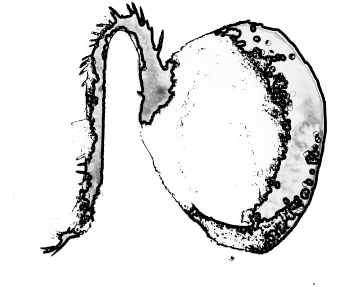

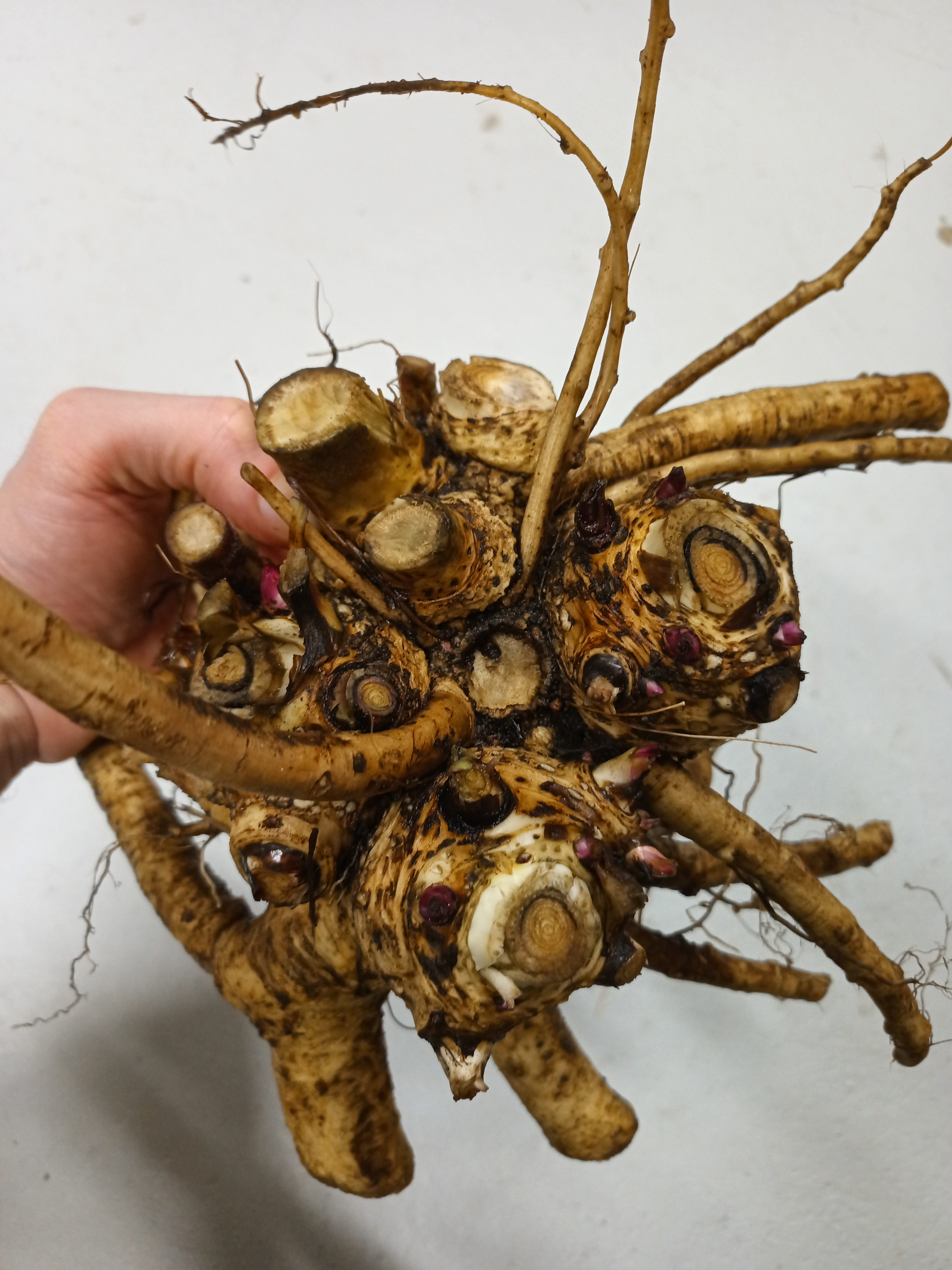
Can be propagated vegetatvely from the adventitious roots and side shoots.
Inula helenium
Nomenclature
Latin NameInula helenium
Common name in English and GermanElecampane, Alant
Regional namesElecampane (English), Enula (Italian), Énule officinale (French), Aulnée (French), Alant (German), Helenenkraut (German), Grāmatzāle (Latvian), Andız otu (Turkish), Oman otu (Turkish), Didysis omanas (Lithuanian), Γλήχονο [Glíchono] (Greek), Ακόνιζα [Akoniza] (Greek), Андουз [Anduz] (Uzbek), قسط شامي [Qust shami] (Arabic), رازیانه کوهی [Rāziyāneh-ye kōhī] (Persian), Девясил высокий [Devyasil vysokiy] (Russian), Оман високий [Oman vysokyy] (Ukrainian), Oman wielki (Polish), Mărarul-iepurelui (Romanian), Örménygyökér (Hungarian), Alunrot (Swedish), 土木香 [Tǔ mù xiāng] (Chinese)
Geographic data
Variety’s range of distributionWestern and Central Asia, Caucasus
Crop's center of diversityCaucasus, Southwest Asia (Near East)
Provenance and collection data
CollectionMedicinal
Seed sourceSpore garden
Cultivation
Life cyclePerennial
Winter hardyYes
Cold stratificationyes
Months suitable for planting seedsFebruary, March, September, October, November
Seed startingOutdoor
Days to harvest500
Growth habitWoody herb
Stem orientationUpright
Use as ground coverDensely covers soil
Plant height (cm)200
Sun exposureFull sun
Water RequirementsDrought resistant
Soil preferenceWell drained, Deep, Loam
Successional communityPioneering, Grassland, Wood edge
Potential use in agro-designWhen densely planted can be used as a living hedge.
Reproduction
PollinationCross pollinating
Reproductive biologyBisexual flower
Likelihood of hybridisationPossible
Use
Consumable partsLeaves, Roots
Medicinal actionExpectorant, Anti-microbial, Bitter
Parts used medicinally and their effectMedically, the roots are prized for their high inulin content (up to 44%) and volatile alantolactones, which provide potent expectorant, antiseptic, and prebiotic properties. It is primarily used in traditional and pharmacological contexts to treat chronic respiratory conditions, stimulate digestion, and support gut health.
Gastronomic useYoung leaves can be used as a pot hearb.