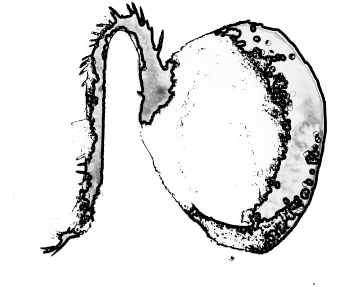

Wild carrots have intense aroma and when yung their roots makes a great culinary ingredient. Due to the capacity of plants to accumulate heavy metals their consumption shall be avoided when they grow in contaminated environments. Seeds of the plant shall be strictly avoided during pregnancy.
Daucus carota Wild carrot
Nomenclature
Latin NameDaucus carota
VarietyWild carrot
Common name in English and GermanWild Carrot, Wilde Möhre
Regional namesWild Carrot (English), Queen Anne's lace (English), Wilde Möhre (German), Carotte sauvage (French), Zanahoria silvestre (Spanish), Carota selvatica (Italian), Cenoura-brava (Portuguese), Wilde peen (Dutch), Vild gulerod (Danish), Морковь дикая [Morkov' dikaya] (Russian), გარეული სტაფილო [Gareuli stapilo] (Georgian), Վայրի գազար [Vayri gazar] (Armenian), Yabani havuç (Turkish), جزر بري [Jazar barri] (Arabic), גזר קיפח [Gizer kipakh] (Hebrew), 野胡萝卜 [Yě húluóbo] (Chinese), ノラニンジン [Nora-ninjin] (Japanese)
Geographic data
Variety’s range of distributionEurope, Western and Central Asia, North Africa
Crop's center of diversityCentral Asia
Provenance and collection data
CollectionGround cover
Seed sourceSpore garden
Cultivation
Life cycleBiannual
Winter hardyYes
Months suitable for planting seedsMarch, April, May, October, November
Seed startingOutdoor
Days to harvest70
Growth habitHerb
Stem orientationUpright
Use as ground coverDensely covers soil
Plant height (cm)120
Sun exposureFull sun, Partial shade
Water RequirementsRainfed
Soil preferenceHighly adaptable, Well drained
Successional communityPioneering
Potential use in agro-designWild carrot can be used in soil rehabilitation projects due to its ability to loosen the soil and very undemanding and adaptable growth habits. It is a typical early succession plant eagerly spreading on the disturbed soil patches. Wild carrots may accumulate heavy metals such as lead, zinc and cadmium. The specie is efficient in extracting potassium and phosphorus from the soil.
Reproduction
PollinationCross pollinating
Reproductive biologyBisexual flower
Likelihood of hybridisationVery likely
Use
Consumable partsSeeds, Roots
Medicinal actionDiuretic, Emmenagogue, Carminative
Parts used medicinally and their effectSeeds and roots are used.
WARNING: Do not use Wild Carrot (especially the seeds) during pregnancy. Plant may also cause phytophotodermatitis.
Gastronomic useRoots of wild carrots can be collected when young and used for the stews. Seeds, in small quantities, can be incorporated in bread due to their anise-like flavor.