
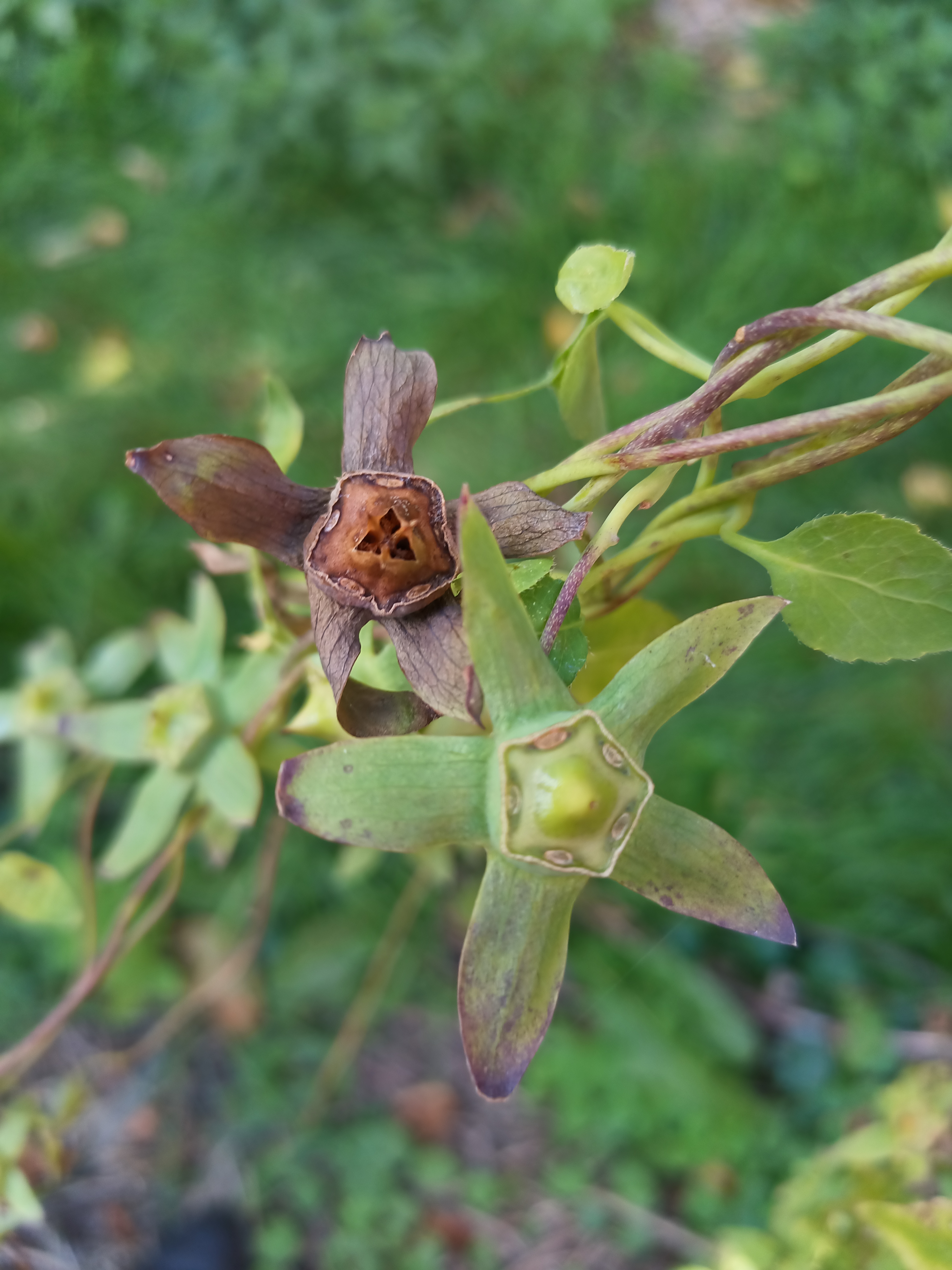
Symbolism: Regarded as a ‘poor man’s ginseng’ and symbol of resilience and endurance in TCM.
Etymology: From Greek ‘kodon’ (bell) and ‘opsis’ (appearance) – referring to bell-shaped flowers.
Traditional ecological knowledge: Central herb in Chinese soups/medicines to strengthen breath (Qi) and immune system, grown on cool forest margins for best root quality.
Codonopsis pilosula Dangshen
Nomenclature
Latin NameCodonopsis pilosula
VarietyDangshen
Common name in English and GermanPoor Man’s Ginseng, falscher Ginseng
Regional names党参 [Dǎngshēn] (Chinese), 만삼 [Mansam] (Korean), Poor Man’s Ginseng (English), Glockenwinde (German), falscher Ginseng (German)
Geographic data
Variety’s range of distributionChina, Korea
Crop's center of diversityEast Asia (China+)
Provenance and collection data
CollectionMedicinal
Seed sourceSpore garden
Cultivation
Life cyclePerennial
Winter hardyYes
Months suitable for planting seedsMarch, April
Seed startingOutdoor
Days to harvest1000
Growth habitTwiner
Stem orientationTrailing
Plant height (cm)50 – 120
Sun exposureFull sun, Partial shade
Water RequirementsRegular irrigation
Soil preferenceWell drained, Lower to neutral pH
Successional communityWood edge
Reproduction
PollinationSelf pollinating
Reproductive biologyBisexual flower
Likelihood of hybridisationPossible
Use
Consumable partsRoots
Medicinal actionTonic, Nervine tonic, Adaptogen
Parts used medicinally and their effectRoot of 3-4 year old plants.