Zea mays Maize amarillo Yucatan

Nomenclature

Latin NameZea mays
VarietyMaize amarillo Yucatan
Common name in English and GermanYellow flint corn, gelber Hartmais
Regional namesK’an Nal-Tel, Chak nal (Yucatec Maya), Maíz amarillo (Spanish)

Geographic data

Variety’s range of distributionYucatan, Mexico
Crop's center of diversityMesoamerica

Provenance and collection data

CollectionGrains and pulses
Seed sourceSpore's partner
PartnerTlayolan
ProgrammeTlayolan

Cultivation

Life cycleAnnual
Winter hardyNo
Months suitable for planting seedsApril, May
Seed startingIndoor, Outdoor
Days to harvest110
Growth habitGrass
Stem orientationUpright
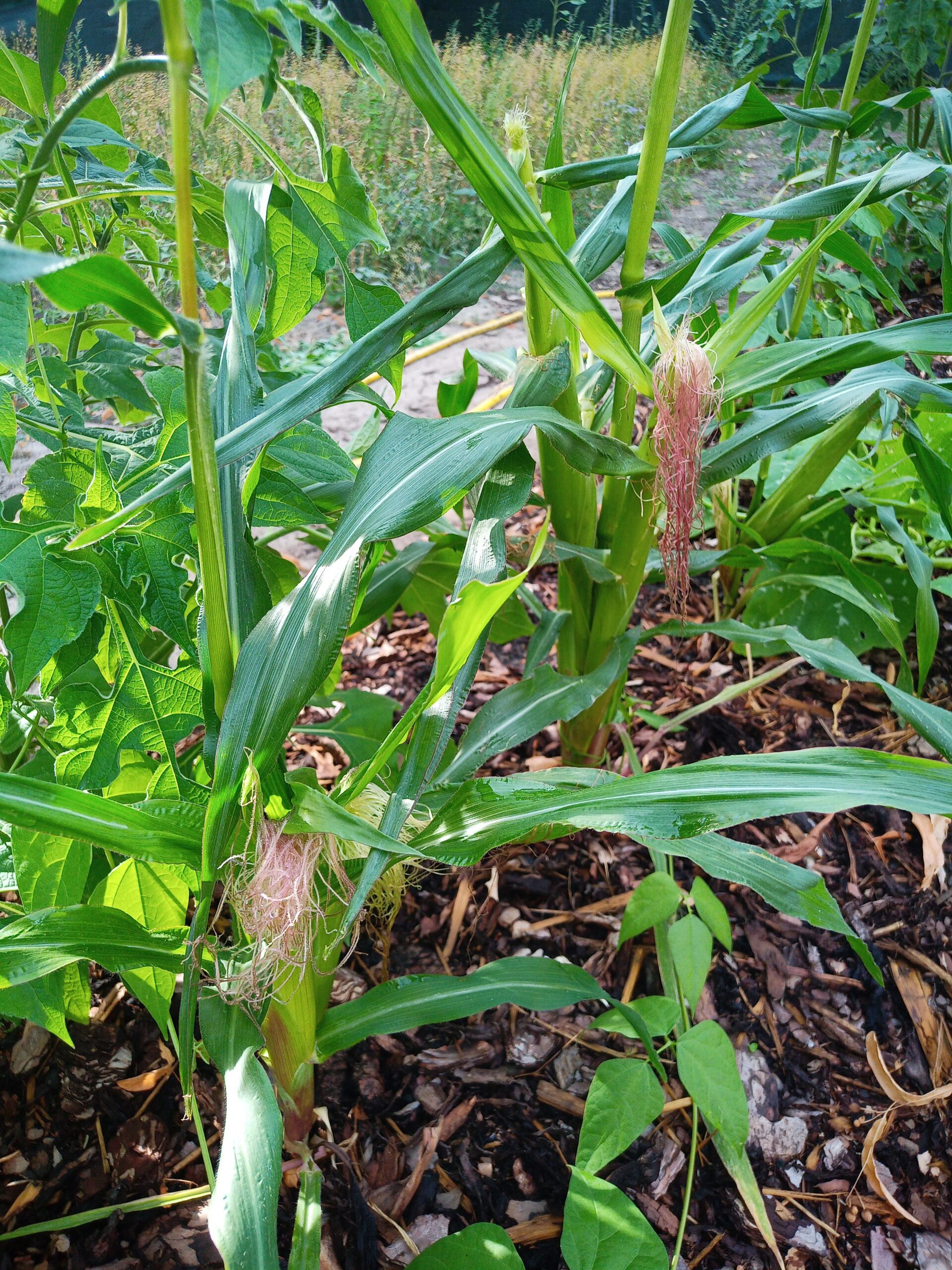
Plant height (cm)150
Sun exposureFull sun
Water RequirementsModerate water demand
Soil preferenceWell drained, Neutral to higher pH
Successional communityPioneering, Grassland
Potential use in agro-designPart of the three sisters companion planting method. Due to its compact size this variety is not suitable as a support for twining beans. It is an early maturing variety.

Reproduction

PollinationCross pollinating
Reproductive biologyMonoecious
Likelihood of hybridisationVery likely

Use

Consumable partsSeeds
Medicinal actionDiuretic, Demulcent
Parts used medicinally and their effectMaize silks are know to have "gentle" diuretic effect that increases urine output. Unlike pharmaceutical diuretics, its high potassium content helps mitigate the risk of electrolyte depletion. It is used specifically to treat edema and swelling.
Gastronomic useFlint maize needs to undergo a specific process of nixtamalization. This process softens the kernels, loosens the tough outer hull (pericarp), and significantly enhances the nutritional value of corn by making niacin (vitamin B3) and tryptophan more bioavailable—preventing deficiency diseases like pellagra. Nixtamalization—soaking and cooking the kernels in an alkaline solution (like lime or wood ash), then rinsing and rubbing to remove the hulls. This yields hominy, which can be ground into masa for tamales, tortillas, or arepas.

Notes

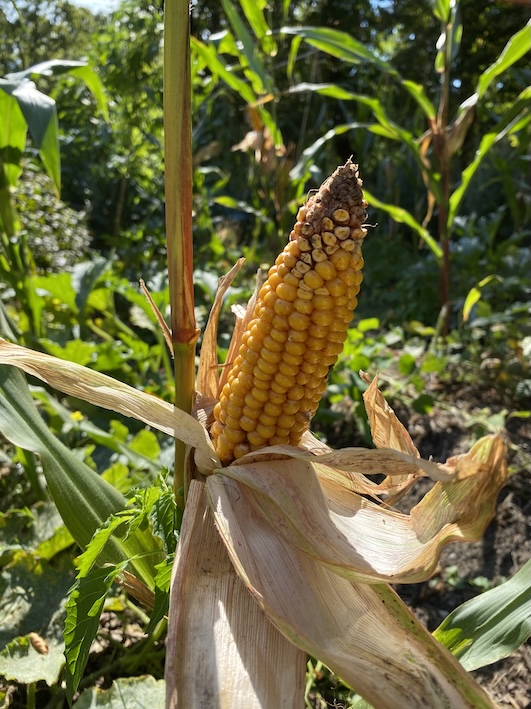
This maize variety is early maturing and very robust, characterized by dark yellow kernels with red streaks and red colored cobs. Unlike many mountain varieties, it produces cobs and matures the seed well even in compost reach garden soil. Considering geology and cultivation methods at its place of origin an alkalic soil will be of an advantage.

At Spore Garden have been cultivating this variety from the very first year and it was always yielding well.

A quite good pozole can be cooked from it if you have a strong enough kitchen mixer to crash the flint-hard kernels.

Maize is an eager outcrosser. To maintain the cultivar, one shall plant only one variety within 500 meters radius. Combining several varieties in one plot will result in hybrid seeds. Population at the Spore Garden got once hybridized with the sweet corn grown by the nearby gardeners. Through careful screening of the planting material we were able to restore original form of the plant.